
Telecom Battery 48V
48V 50-200Ah LiFePO4 battery for telecom base stations
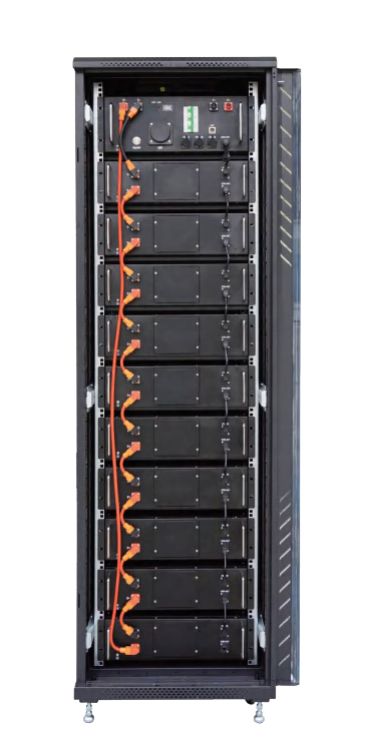
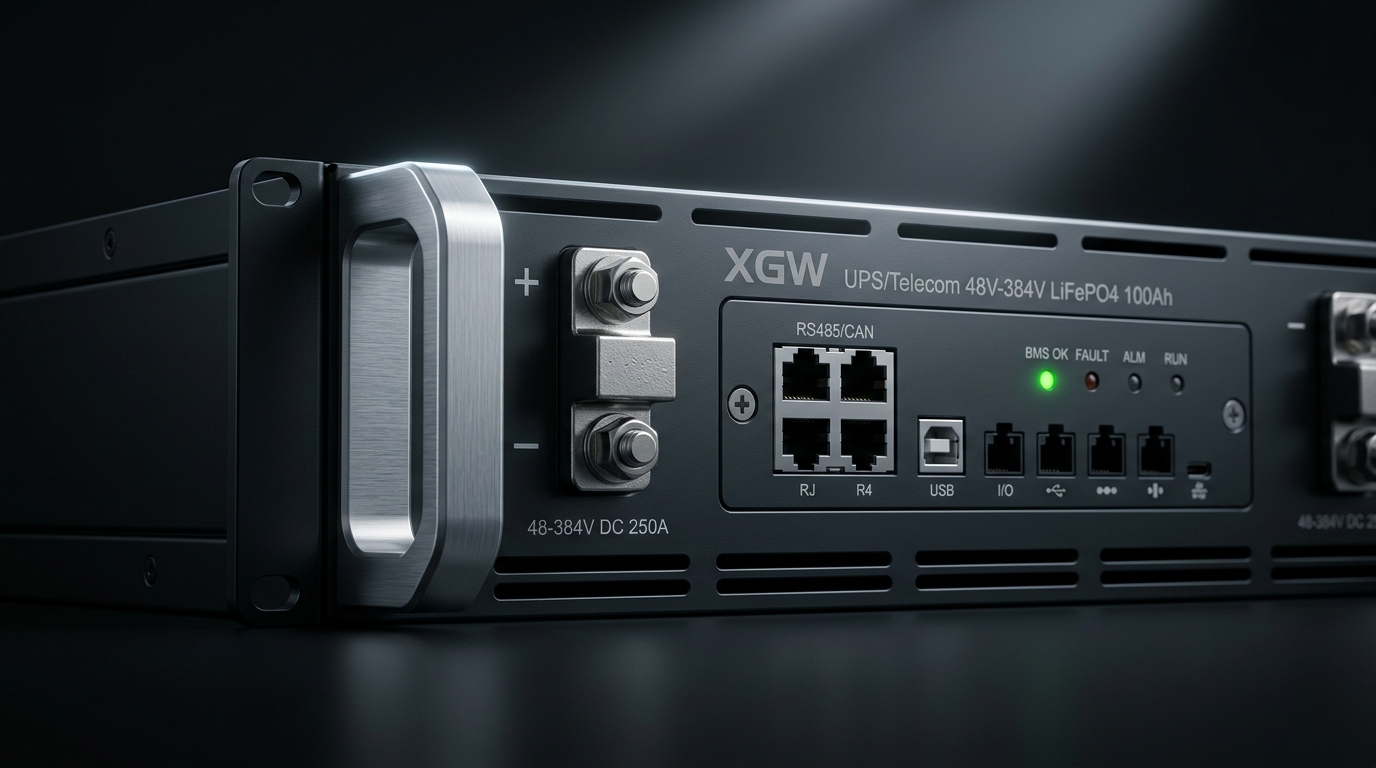
Looking for a 48V UPS battery? XGW supplies 48V LiFePO4 UPS battery modules and rack cabinets (also 192V/384V/409V) with protocol-matched BMS (CAN/RS485) for VRLA replacement and new UPS systems.
Answer: XGW UPS lithium batteries span 48V to 409V LiFePO4 strings with up to 6C peak discharge — sized to the same DC bus and float-charge profile as your UPS. Tier-1 cells (CATL/BYD/EVE), 6,000+ cycles, active-balancing BMS with CAN/RS485. We confirm compatibility against your UPS model before order; no universal plug-and-play claim.
XGW UPS battery strings deliver dependable backup for data centers, hospitals, server rooms and industrial UPS systems. Configurations span 48V modular packs up to 409V high-voltage strings, all built on LiFePO4 cells with 5,000+ cycle life and an active balancing BMS that guards every cell against overcharge, over-discharge and thermal events. Drop-in compatibility with major UPS platforms simplifies lead-acid replacement.
Request a Quote Get Datasheet WhatsApp| Voltage Options | 48V / 192V / 384V / 409V |
|---|---|
| Chemistry | LiFePO4 |
| Cycle Life | ≥ 5,000 cycles @ 80% DoD |
| BMS | Active balancing, overcharge/over-discharge protection |
| Communication | CAN / RS485 |
| Energy Density | ~1/3 volume and ~1/2 weight vs VRLA |
| Operating Temperature | -20°C to +55°C |
| Design Life | up to 15 years |
| Certifications | CE, RoHS, UN38.3, IEC 62619 |
| Warranty | 5 years |
High-reliability LiFePO4 backup for IT loads in enterprise and hyperscale data centers. Cycle life up to 5,000+ @80% DoD (configuration-dependent) with active balancing BMS supports dependable power through thousands of discharge events; design life up to 15 years for longer-string LiFePO4 configurations.
Life-safety power continuity for medical facilities. Low-leakage design and IEC 62619 safety certification support healthcare code compliance. CAN/RS485 integration with facility BMS provides real-time battery health monitoring.
Process-critical backup power for manufacturing, oil & gas and chemical facilities. Wide -20C to +55C operation and rugged construction suit harsh industrial environments where VRLA batteries fail prematurely.
Rack-level UPS energy storage for edge data centers, server rooms and telecom exchanges. Drop-in replacement for VRLA strings — 1/3 the volume and 1/2 the weight with 3-4x the cycle life.
Zero-downtime backup for trading floors, ATMs and banking infrastructure. Active balancing BMS with cell-level monitoring ensures no single cell failure compromises the entire string. CAN telemetry integrates with DCIM platforms.
UPS backup for traffic control systems, railway signaling and airport navigation aids. Vibration-resistant design and wide-temperature operation critical for transportation infrastructure reliability.
Alongside the LiFePO4 strings above, XGW offers a sodium-ion chemistry option for UPS and industrial backup — the 36V 52Ah pack (1.872 kWh). It keeps the same UPS / data-center / telecom-backup application profile while adding a cold-climate safety margin and lower material cost, and it ships at 0V for simpler transport and storage.
| Nominal voltage | 36 V (12S sodium-ion, operating 30–43.8 V) |
|---|---|
| Nominal capacity | 52 Ah / 1.872 kWh |
| Charge current | Standard 0.2C (10.4 A); max 0.5C (26 A) |
| Discharge current | Continuous 1C (52 A); peak 2C (104 A, ≤5 s) |
| Chemistry | Sodium-ion (Na-ion) |
| Application | UPS backup, data centers, telecom backup, industrial emergency, renewable-energy backup |
| BMS & communication | Smart BMS with SOC/SOH; RS485 / CAN configurable per project |
| Certifications | UL1642 (cells), FCC, UN38.3, IEC, ISO 9001 / 14001 / 45001 |
| Dimensions & weight | Available on request (OEM/ODM custom enclosure) |
UPS strings are judged on footprint, swap frequency and 10-year cost. Lithium changes the math versus sealed lead-acid.
| Cycle life | 6,000+ cycles | 300-500 cycles |
|---|---|---|
| Footprint | ~50% of VRLA string | Large, heavy racks |
| Maintenance | Near-zero | Annual test, periodic swap |
| 10-yr TCO | Lower (no swap labor) | Higher (battery + labor) |
| Best for | Edge / modular UPS | Legacy float plants |
Choose LiFePO4 UPS strings when floor space, weight rating or maintenance access is tight - common in edge data centers and micro-modules. Pair with our 48V telecom packs for shared BTS/UPS sites. Start the build from the Battery & ESS hub.
LiFePO4 delivers up to 3-4x cycle life and typically ~1/3 the volume and ~1/2 the weight vs equivalent VRLA, plus precise SOC telemetry - reducing replacement labor and total cost of ownership while freeing valuable floor space.
Match your UPS DC bus: 48V for small modular systems, 192V/384V/409V for central UPS strings. We map configurations to all major UPS platforms - send us your model for a fit check.
The active balancing BMS monitors every cell for voltage, current and temperature, enforcing overcharge, over-discharge, over-current, short-circuit and thermal limits with redundancy.
Yes. CAN and RS485 interfaces expose SOC, SOH and alarm states to the UPS host and DCIM/BMS monitoring platforms.
Yes. Alongside the LiFePO4 strings we offer a 36V 52Ah sodium-ion backup pack (1.872 kWh) for UPS, data-center and industrial-emergency use. Sodium-ion adds a cold-climate safety margin and lower material cost. Tell us your DC bus and required runtime and we map the chemistry to your site.
In most cases yes - the packs are built as drop-in replacements with the same voltage windows, and the BMS handles balancing and protection. The one thing to verify is charger voltage and current against the LiFePO4 charge profile, so send us your UPS model and we confirm the fit before you order.
48V 50-200Ah LiFePO4 battery for telecom base stations
50kWh-1MWh+ container/cluster ESS for C&I and grid
25-1000W rail-mounted PSUs for control panels and automation
100Ah / 4.8kWh Na-ion pack, 4,000 cycles, discharge to -20℃ — cold-climate option
20-60Ah, 380-1,000A CCA, cranking to -40℃ without pre-heating
Share your specs, target application and quantity. Our engineers reply within 24 hours with datasheets, samples and OEM/ODM options.
Prefer to chat? Message us on WhatsApp
37 senior R&D engineers. OEM/ODM — custom & project development welcomed; standard volume from 500 units. Samples in 3-7 days.
Get a Quote WhatsApp Us Download Selection GuideXGW's high rate lithium battery for UPS supports discharge rates up to 6C, which is what lets a lithium pack carry the inrush and peak loads of an online UPS without the voltage sag a VRLA string shows. The range spans 48V to 409V, drops into existing UPS cabinets as a VRLA replacement, and reports through CAN/RS485 with a BMS that manages cell balance and temperature. For industrial UPS, the same cells back up PLC and process loads.
| Range | Peak rate | Drop-in | Comms |
|---|---|---|---|
| 48V - 409V | up to 6C | VRLA replacement | CAN / RS485, BMS |
Size the bank against your load in the data center & UPS backup solution, or ask about a custom high-voltage pack.
Up to 6C peak, which covers UPS inrush and high peak loads. Tell us the DC bus voltage and required backup time and we size the pack.
We build LiFePO4 systems with Tier-1 Grade-A cells (CATL, BYD, EVE) and also offer sodium-ion for specific temperature and cost profiles. Cell chemistry is stated per product.
Our battery systems are built to IEC 62619, IEC 62040, UN38.3, with CE, CB and RoHS. (Note: UL 1973 / UL 924 listing is not claimed; discuss certification needs per project.)
The BMS is configured per model to the host protocol — Modbus, CAN or RS485. Share your UPS model and we confirm the fit and reporting before you order; we do not claim universal plug-and-play compatibility.
All battery products support custom and project development with no MOQ. Standard volume lines run from 500 units, with samples in 3-7 days.
From 48V rack batteries up to 409V high-voltage strings (e.g. 384V = 120S LiFePO4), sized to the UPS DC bus and float-charge profile.
We ship to 50+ countries, with project deployments across Europe, the Middle East, Africa, Latin America and Asia.