
Home Energy Storage System
5-20kWh stackable home battery with hybrid inverter
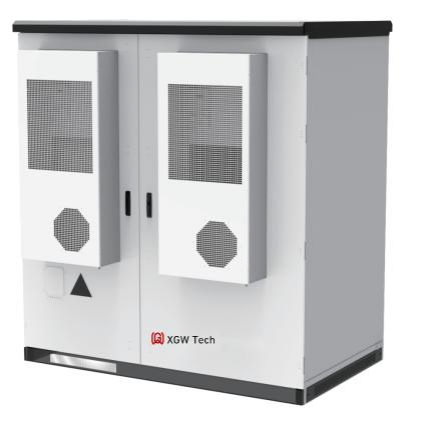
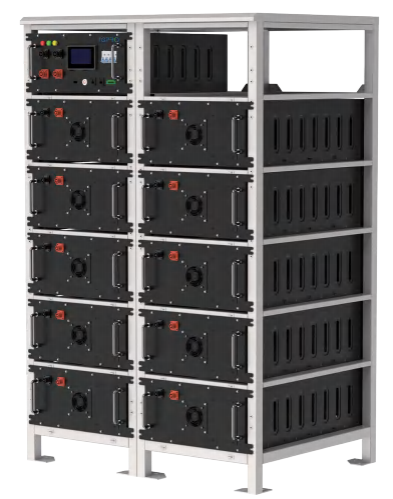
Answer: XGW industrial ESS scales from 50kWh to over 1MWh with a three-level BMS, liquid or air cooling and up to 1500VDC architecture. Built for peak shaving, frequency regulation and backup, it uses Tier-1 LiFePO4 cells with IEC 62619 and UN38.3 certification and remote monitoring over CAN/RS485.
XGW industrial ESS platforms scale from 50kWh commercial clusters to 1MWh+ container systems for grid services. A three-level BMS architecture (cell BMU - rack BCMU - system BBU) supervises every cell, while liquid or forced-air cooling maintains temperature uniformity across the pack. PCS integration up to 1500VDC supports peak shaving, frequency regulation, renewable firming and microgrid applications.
Request Quote & Datasheet WhatsApp| Capacity | 50kWh - 1MWh+ (container / cluster) |
|---|---|
| System Voltage | Customizable, up to 1500VDC |
| Chemistry | LiFePO4 |
| BMS | 3-level: BBU / BMU / BCMU |
| Cooling | Liquid / forced-air |
| Cycle Life | ≥ 6,000 cycles @ 80% DoD |
| Communication | Modbus, IEC 61850, CAN |
| Protection | Grid-grade relay coordination, fire detection & suppression |
| Applications | Peak shaving, frequency regulation, microgrid |
| Certifications | CE, IEC 62619, UN38.3; grid codes per market |
| Warranty | 10 years |
Cut demand charges with daily cycling. The system charges during off-peak hours and discharges during peak demand windows, reducing the facility's maximum demand measurement and lowering utility bills by 20-40%.
Fast-response grid services for utility-scale ancillary service markets. High C-rate discharge capability and liquid cooling maintain tight cell temperature spreads for rapid power delivery.
Smooth intermittent solar and wind output by storing excess generation and releasing it during low-production periods. Enables higher renewable penetration without grid stability concerns.
Islanded resilience for campuses, industrial parks and remote communities. Black-start capability and 1500VDC PCS integration support seamless transition between grid-connected and islanded operation.
Grid-scale UPS alternative for hyperscale data centers and central telecom exchanges. 6,000+ cycle LiFePO4 chemistry with 3-level BMS provides multi-hour backup at lower total cost than VRLA.
Sustain critical manufacturing processes through grid disturbances. Modbus and IEC 61850 integration with plant SCADA enables automated load shedding and process protection during power transitions.
Commercial and industrial storage is specified by site size first, then chemistry. The two decisions buyers face are form factor and LiFePO4 vs alternatives.
| 100-300 kWh | Outdoor cabinet, plug-and-play | Single / few cabinets |
|---|---|---|
| 500 kWh - 2 MWh | Multi-cabinet cluster | Container preferred |
| Chemistry | LiFePO4 standard | LFP; flow for long-duration |
| Install | Grapple + commission | Crane + grid tie |
| Best for | Factory / microgrid | Large peak-shift |
Choose cabinet ESS for 100-300 kWh factory and microgrid loads that need fast deploy; scale to containers past ~500 kWh. See the C&I ESS page and the smaller residential unit in the Battery & ESS hub.
Standard 50kWh rack clusters parallel into containers; our engineers size the configuration from your load profile, tariff structure and target payback.
Cell-level BMUs, rack-level BCMUs and the system BBU supervise voltage, temperature and current at every tier - providing redundancy, balancing and black-start-safe control.
Air cooling suits moderate climates and lower C-rates; liquid cooling maintains tighter cell temperature spreads for high-power frequency regulation and hot climates, extending calendar life.
Yes. The system exposes Modbus and IEC 61850 interfaces for integration with standard energy management and SCADA platforms.
5-20kWh stackable home battery with hybrid inverter
48V-409V LiFePO4 battery strings for UPS systems
51.2V 100-200Ah traction battery for EV and material handling
100Ah / 4.8kWh Na-ion pack, 4,000 cycles, discharge to -20℃ — cold-climate option
20-60Ah, 380-1,000A CCA, cranking to -40℃ without pre-heating
37 senior R&D engineers. OEM/ODM — custom & project development welcomed; standard volume from 500 units. Samples in 3-7 days.
Get a Quote WhatsApp UsWe build LiFePO4 systems with Tier-1 Grade-A cells (CATL, BYD, EVE) and also offer sodium-ion for specific temperature and cost profiles. Cell chemistry is stated per product.
Our battery systems are built to IEC 62619, IEC 62040, UN38.3, with CE, CB and RoHS. (Note: UL 1973 / UL 924 listing is not claimed; discuss certification needs per project.)
The BMS is configured per model to the host protocol — Modbus, CAN or RS485. Share your UPS model and we confirm the fit and reporting before you order; we do not claim universal plug-and-play compatibility.
All battery products support custom and project development with no MOQ. Standard volume lines run from 500 units, with samples in 3-7 days.
From 48V rack batteries up to 409V high-voltage strings (e.g. 384V = 120S LiFePO4), sized to the UPS DC bus and float-charge profile.
We ship to 50+ countries, with project deployments across Europe, the Middle East, Africa, Latin America and Asia.