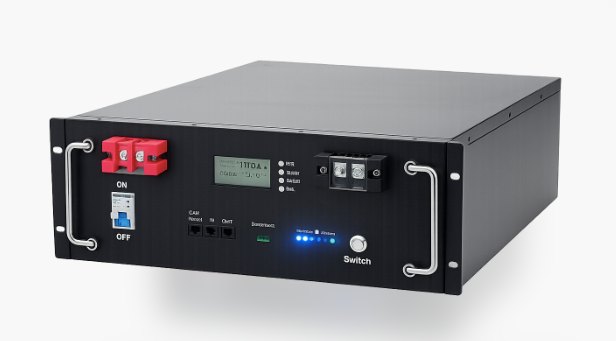
48V Sodium-Ion Telecom Battery 50–200Ah
48 V sodium-ion telecom batteries (50/100/200 Ah, 2.4–9.6 kWh) for telecom base stations, built for sites where temperature is the hard constraint. Compared with LiFePO4, sodium chemistry keeps more of its usable capacity in deep cold and discharges to -20℃ with no heater (cells rated -35℃ to 65℃) — less winter derating, no heater power draw and no heater maintenance call-outs.
Battery ESSSodium-IonTelecom Battery
Key Features
Cold-weather discharge without heaters
Discharge is rated from -20℃ and the sodium cells themselves are rated -35℃ to 65℃, with better capacity retention in deep cold than LiFePO4. For unheated cabinets, alpine sites and northern Russia that means less winter derating — and no heater to power or maintain.
4,000-cycle design life
Rated 4,000 cycles to 80% SOH (25℃, 0.5C/0.5C) — in the same class as our LiFePO4 telecom packs and far beyond lead-acid, which changes the site TCO maths over a ten-year horizon.
Smart BMS with standard interfaces
RS485 and CAN over RJ45 as standard, plus an onboard LCD, Bluetooth monitoring, dry contact and air switch. An SNMP gateway is available on request so SOC, SOH, cell voltage and temperature report into the operator's existing NMS — the same integration path as our LiFePO4 telecom range.
Cost stability for multi-year rollouts
Sodium is abundant and not subject to lithium or cobalt price volatility. For operators tendering a multi-year site rollout, this reduces exposure to raw-material swings between tender and delivery.
Complements rather than replaces LiFePO4
Where energy density and cycle life dominate, LiFePO4 remains the better choice — we make both. The sodium-ion option exists for the sites where low temperature drives the design.
Technical Specifications
| Chemistry | Sodium-ion (Na-ion), 16S10P — NaCR32140 3.0 V cells |
|---|
| Nominal voltage | 48 V DC (operating 32–58.4 V; 50/200 Ah: 40–54.4 V) |
|---|
| Rated capacity | 50 / 100 / 200 Ah (2.4 / 4.8 / 9.6 kWh) |
|---|
| Charge voltage | 58.4 V max (cell cut-off 2.0–2.3 V) |
|---|
| Charge / discharge current | 50Ah: 25 A std / 50 A max; 100Ah: 50 A std / 100 A max; 200Ah: 100 A std / 200 A max |
|---|
| Cycle life | 4,000 cycles to 80% SOH (25℃, 0.5C/0.5C) |
|---|
| Operating temperature | Charge 0℃ to 45℃; discharge -20℃ to 60℃ (cells rated -35℃ to 65℃) |
|---|
| Energy density | ≈60–80 Wh/kg at pack level — lower than LiFePO4 |
|---|
| BMS & monitoring | Over-charge, over-discharge, over-current, short-circuit and temperature protection with balancing; RS485 + CAN (RJ45), LCD, Bluetooth, dry contact, air switch |
|---|
| Storage state | Ships at factory charge (40–48 V); long-term storage 48–52 V, top up every 3 months |
|---|
| Dimensions | 661 × 440 × 176 mm ±2 (mounting ears and UN packaging included) |
|---|
| Weight | 60 kg ±1.2 kg |
|---|
| Certification | UN38.3 compliant; UN transportation test summary (T.1–T.8) supplied with shipment — request a copy at sales@xgwtech.com; ships in UN carton / UN wooden box + EPE |
|---|
Model Comparison — 50 / 100 / 200 Ah
| Model | Nominal energy | Dimensions (W×D×H) | Weight | Charge current | Max continuous discharge |
|---|
| 48V 50Ah | 2.4 kWh | 442 × 440 × 134.5 mm | 40 kg ±2 | 25 A std / 50 A max (0.5C/1C) | 50 A |
| 48V 100Ah | 4.8 kWh | 661 × 440 × 176 mm | 60 kg ±1.2 | 50 A std / 100 A max (0.5C/1C) | 100 A |
| 48V 200Ah | 9.6 kWh | 661 × 440 × 220 mm | 118 kg ±2 | 100 A std / 200 A max (0.5C/1C) | 200 A |
All models: 16S sodium-ion, RS485/CAN BMS, IP20, 19-inch rack, cycle life ≥4,000 @ 80% DOD, charge 0℃–45℃ / discharge -20℃–60℃ (cells -35℃–65℃). 100 Ah charges to 58.4 V; 50/200 Ah to 53.6–54.4 V.
Applications
Cold-climate BTS sites
Where heater power draw or heater maintenance is the constraint.
Off-grid solar BTS
Deep daily cycling in unheated enclosures.
Alpine & high-altitude sites
Low ambient temperature throughout the year.
Spare-unit fleets
Held at the recommended 48–52 V storage voltage with a top-up every 3 months, commissioned when a site needs them.
Sodium-ion vs LiFePO4 vs Lead-acid: Which Chemistry for Your Site?
This page covers sodium-ion; the decision against LiFePO4 and lead-acid comes down to temperature and volume tolerance.
Sodium-ion vs LiFePO4 vs lead-acid decision
| Cold performance | Full at -20°C, no heater | Reduced, heater draws power | Severe loss |
|---|
| Cycle life | 4,000 cycles | 6,000 cycles | 300-500 |
|---|
| Energy density | ~80 Wh/kg | Higher | Low |
|---|
| Best for | Cold / remote BTS | Tropical / general | Legacy only |
|---|
Choose sodium-ion when winter capacity or heater-power draw drives your design; otherwise the LiFePO4 48V telecom pack gives more kWh per kilo. Both are catalogued in the Battery & ESS hub.
Frequently Asked Questions
When should I choose sodium-ion over LiFePO4 for a telecom site?
When winter performance and lifecycle cost drive the design. If your sites see months of sub-zero temperatures and you are budgeting heater energy, heater maintenance or winter capacity derating, sodium-ion is worth evaluating. If the site is temperate and you are optimising for cycle life and energy density, our LiFePO4 range is the better fit — we manufacture both and will say so either way.
Does it need a heater in cold climates?
No heater is required for discharge down to -20℃, and the sodium cells themselves are rated from -35℃. Charging is specified from 0℃ to 45℃ — contact us with your site's temperature profile and we will confirm the charging strategy for your coldest months.
Can it report into our existing NMS?
Yes. The BMS exposes RS485 and CAN over RJ45, with an onboard LCD and Bluetooth for local monitoring. We can also supply an SNMP gateway so SOC, SOH, cell voltage, temperature and alarms appear in your existing network management system, the same way our LiFePO4 telecom batteries do.
How does the cycle life compare with your LiFePO4 telecom battery?
The pack is rated 4,000 cycles to 80% SOH (25℃, 0.5C/0.5C) — somewhat below our 6,000-cycle LiFePO4 telecom range but well beyond lead-acid. The genuine trade-off is energy density: about 80 Wh/kg at pack level, so sodium needs more volume or weight for the same kWh. We will give you both options' numbers so the comparison is made on data.
How is it shipped and stored?
The pack ships at its factory charge state (40–48 V) in UN-certified packaging — UN carton or UN wooden box with EPE, on export pallets. For storage beyond three months, hold 48–52 V and top up quarterly. Ask us for the current UN38.3 transport documentation for your import market.
Related Products