
Telecom Battery 48V
48V 50-200Ah LiFePO4 battery for telecom base stations
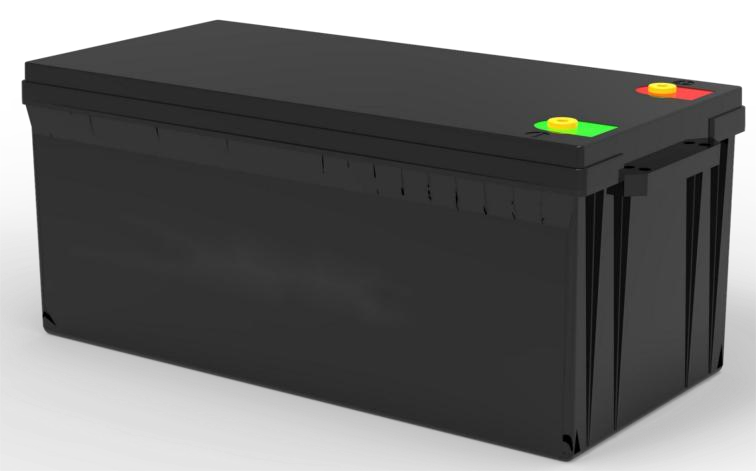
Answer: XGW power batteries deliver 51.2V at 100–200Ah LiFePO4 with 4,000+ cycles and a CAN/RS485 smart BMS — built for electric vehicles, forklifts and AGV/AMR traction duty. Tier-1 cells and IEC 62619/UN38.3 certification. Custom voltage and enclosure welcome; no MOQ for project development.
The XGW power battery series supplies high-discharge traction power for electric vehicles, forklifts, AGVs and heavy-duty equipment. The 51.2V 100-200Ah LiFePO4 platform endures 4,000+ deep cycles, sustains high-current discharge for acceleration and gradeability, and communicates via CAN/RS485 with vehicle controllers. Custom capacities, enclosures and connectors are engineered to order.
XGW builds its LiFePO4 batteries on Tier-1 LFP cells (CATL / BYD / EVE), managed by a smart RS485/CAN BMS with full UN38.3 documentation — the same quality system across its own Shenzhen and Zhongshan factories since 2009.
Request Quote & Datasheet WhatsApp| Nominal Voltage | 51.2V |
|---|---|
| Capacity | 100Ah - 200Ah (customizable) |
| Chemistry | LiFePO4 |
| Cycle Life | ≥ 4,000 cycles @ 80% DoD |
| Discharge | High-rate capable for traction loads |
| BMS | Smart BMS, CAN / RS485 |
| Enclosure | Metal, vibration-resistant |
| Operating Temperature | -20°C to +60°C |
| Certifications | CE, RoHS, UN38.3 |
| Warranty | 3 years |
Low-speed EV and utility vehicle traction power. High-rate discharge supports acceleration and gradeability. CAN/RS485 BMS communicates SOC and health to the vehicle controller for range estimation and diagnostics.
Opportunity-charging warehouse fleets: LiFePO4 tolerates partial charging during operator breaks, enabling multi-shift operation from one pack instead of battery swapping. Eliminates dedicated charging room and spare battery inventory.
High-cycle automated guided vehicles and autonomous mobile robots in warehouses and factories. 4,000+ deep cycles endure the daily charge-discharge pattern of 24/7 automated operations.
Traction and auxiliary power for construction equipment, mining vehicles and agricultural machinery. Vibration-resistant metal enclosure and wide -20C to +60C operation suit harsh working environments.
House battery for boats, yachts and recreational vehicles. LiFePO4 delivers stable 51.2V power for inverters, navigation and comfort systems with 1/3 the weight of equivalent lead-acid banks.
Maintenance-free power for golf carts, campus shuttles and grounds maintenance vehicles. No watering, no acid and no equalization charging — simply plug in and drive.
Forklifts, AGVs and ground support need high sustained current. The chemistry choice trades safety, weight and cycle cost.
| Safety | Stable, non-combustible | Needs BMS care | Stable, heavy |
|---|---|---|---|
| Weight | Light | Lightest | Heaviest |
| Cycle life | 3,000-6,000 | 1,000-2,000 | 300-500 |
| Best for | Indoor fleet, opportunity charge | Weight-critical | Legacy, low cost |
Pick LiFePO4 power batteries for indoor fleets and opportunity-charging warehouses where safety and cycle cost dominate. It is the default in the Battery & ESS hub motive range.
In most forklift classes yes - LiFePO4 brings 3-4x cycle life, opportunity charging (no full discharge required) and zero watering maintenance. We confirm fitment by make and model.
Unlike lead-acid, LiFePO4 tolerates partial charging during breaks - so fleets run multiple shifts from one pack instead of swapping batteries and dedicating a charging room.
The platform supports high-rate traction discharge; specific C-rates depend on capacity and cooling - contact engineering with your duty cycle for confirmation.
Yes. CAN and RS485 interfaces provide SOC, alarms and current data to standard vehicle/AGV controllers; protocol mapping is configured to order.
48V 50-200Ah LiFePO4 battery for telecom base stations
50kWh-1MWh+ container/cluster ESS for C&I and grid
5-20kWh stackable home battery with hybrid inverter
100Ah / 4.8kWh Na-ion pack, 4,000 cycles, discharge to -20℃ — cold-climate option
20-60Ah, 380-1,000A CCA, cranking to -40℃ without pre-heating
37 senior R&D engineers. OEM/ODM — custom & project development welcomed; standard volume from 500 units. Samples in 3-7 days.
Get a Quote WhatsApp UsFull specifications, dimensions and test data for the XGW power battery series — one catalog covering the 51.2V 100-200Ah LiFePO4 traction platform and its configurations.
We build LiFePO4 systems with Tier-1 Grade-A cells (CATL, BYD, EVE) and also offer sodium-ion for specific temperature and cost profiles. Cell chemistry is stated per product.
Our battery systems are built to IEC 62619, IEC 62040, UN38.3, with CE, CB and RoHS. (Note: UL 1973 / UL 924 listing is not claimed; discuss certification needs per project.)
The BMS is configured per model to the host protocol — Modbus, CAN or RS485. Share your UPS model and we confirm the fit and reporting before you order; we do not claim universal plug-and-play compatibility.
All battery products support custom and project development with no MOQ. Standard volume lines run from 500 units, with samples in 3-7 days.
From 48V rack batteries up to 409V high-voltage strings (e.g. 384V = 120S LiFePO4), sized to the UPS DC bus and float-charge profile.
We ship to 50+ countries, with project deployments across Europe, the Middle East, Africa, Latin America and Asia.