
UPS Battery (Product)
48V-409V LiFePO4 UPS battery strings with active balancing BMS and up to 6C discharge.
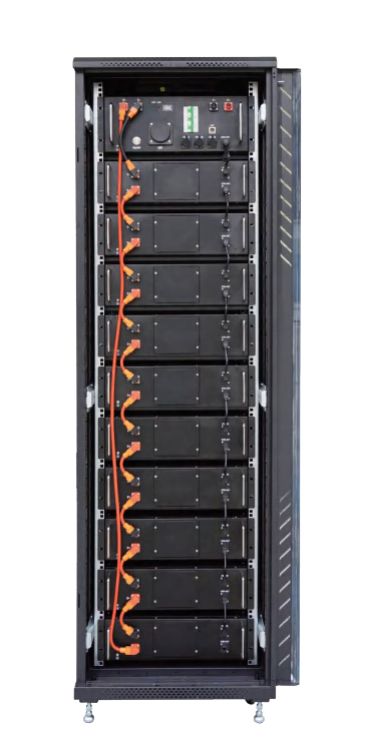
A practical guide to choosing LiFePO4 backup for UPS and data-center loads. We cover how to match your DC bus, confirm charger compatibility, size runtime and replace lead-acid — then point you to the XGW UPS battery product range (48V-409V, up to 6C high-rate) for the actual specs and quote.
View UPS Battery Products Get Datasheet WhatsAppEvery XGW UPS lithium battery is integrated with Tier-1 LFP cells (CATL / BYD / EVE) and an active-balancing BMS, so the pack holds its capacity and safety margins across the full service life.
See the full comparison in LiFePO4 vs VRLA Battery and the step-by-step VRLA-to-LiFePO4 Retrofit Checklist.
Deeper reading: UPS Lithium Battery Selection · LiFePO4 vs VRLA · Retrofit Checklist
XGW LiFePO4 battery cabinets are built as drop-in replacements for the DC bus of major UPS platforms including APC, Eaton and Vertiv. They run as standard VRLA replacements on voltage and float-charge parameters, so the battery deploys regardless of brand. For full battery-to-UPS communication — state-of-charge, alarms and shutdown signalling — we adapt the BMS to the host protocol: send us your UPS model and we integrate to its communication protocol. If the host protocol is not available, we ship with our standard CAN / RS485 BMS and the system runs in standalone voltage mode. In every case the pack is sized and confirmed against your UPS before you order.
UPS batteries must deliver peak power, not just energy. XGW's high-rate lithium battery for UPS supports discharge up to 6C — enough to carry the inrush and peak loads of an online UPS where a VRLA string would sag. The range spans 48V to 409V, drops into existing cabinets as a VRLA replacement, and reports through CAN/RS485 with a BMS managing cell balance and temperature. See the product page for the full voltage and configuration list.
Download the LiFePO4 UPS battery specification sheet for the exact configuration you need. Each PDF opens in a new tab.
Match the battery DC bus to your UPS: 48V for small modular systems, 192V/384V/409V for central UPS strings. Then confirm the charger voltage and current against the LiFePO4 charge profile. XGW maps configurations to all major UPS platforms — send us your UPS model and we confirm the fit before you order.
Online UPS loads include inrush and peak currents, so the battery must deliver high power without voltage sag. XGW UPS lithium batteries support up to 6C peak discharge, which carries UPS inrush and high peak loads that a VRLA string cannot. Tell us the DC bus voltage and required backup time and we size the pack.
Capacity (Ah) = load power (W) × backup time (h) / (bus voltage × efficiency). A 5kW load on a 48V bus for 2 hours is roughly 5,000 × 2 / (48 × 0.9) ≈ 231Ah. Our UPS battery product page lists 48V-409V options; for a worked example see the runtime guide.
Share your UPS model, DC bus voltage, required backup time and load power. With those we confirm the LiFePO4 pack, the BMS communication (CAN / RS485, SNMP optional) and any cabinet or terminal adaptation, then return a datasheet and quote.
48V-409V LiFePO4 UPS battery strings with active balancing BMS and up to 6C discharge.
48V 50-200Ah LiFePO4 backup for base stations and cabinets.
125kW 261kWh all-in-one cabinet for peak shaving and backup.
Replacing VRLA in UPS systems — the detail guide.
Which backup battery wins on cost and lifecycle.
Solution page for data-center and UPS backup power.
Tell us your UPS model and backup time. We confirm the fit and return a datasheet within 24 hours.
Get a Quote WhatsApp