
C&I Microgrid ESS for Tropical Heat and Humidity in Peru
The Challenge
- A commercial and industrial microgrid site in Peru's tropical rainforest belt, running on grid supply, PV generation and diesel backup. The climate is the hard part: sustained high ambient temperature combined with relative humidity that stays high all year.
- Heat and humidity attack a battery system differently from dry heat. The main risk is condensation — when a warm, moisture-laden enclosure cools overnight or during a rain squall, water forms on the coldest surfaces inside the cabinet. That moisture bridges conductors, drives insulation resistance down, and corrodes terminals, busbars and PCBs over time.
- On top of that, sustained high temperature accelerates cell ageing, and the site still needed the microgrid itself to behave as one system: PV consumed rather than curtailed, battery covering peaks, diesel starting only when genuinely required.
The Solution
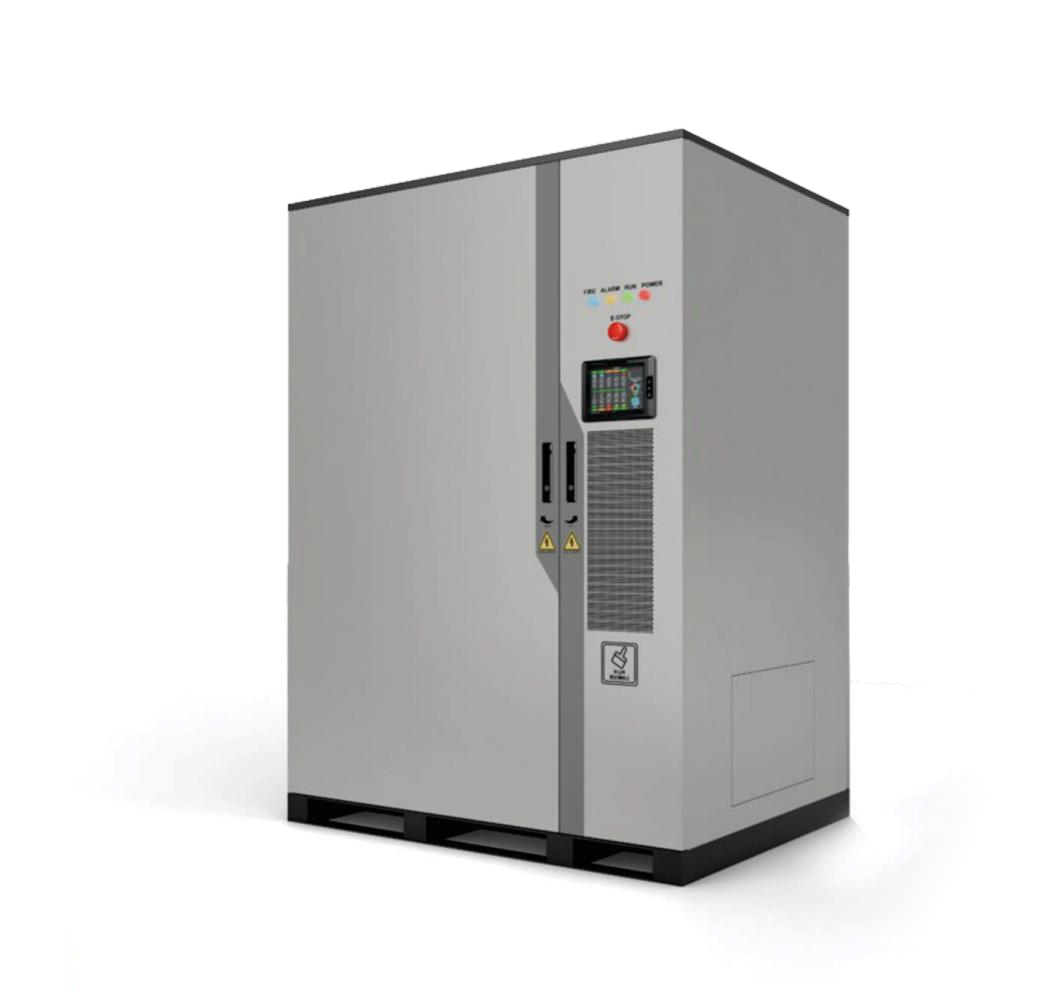
- We supplied the LiFePO4 storage for the microgrid as a sealed, climate-managed enclosure rather than an open ventilated rack. The cabinet carries a high ingress-protection rating with gasketed doors and IP-rated cable glands, so humid air does not cycle freely through the battery compartment.
- Condensation is controlled, not left to chance. The enclosure uses a waterproof breathable vent so internal pressure equalises without drawing in liquid water, conformal coating on the electronics as a second line of defence, and a heater that holds internal temperature above the dew point when the system is idle or ambient temperature drops suddenly. The BMS monitors insulation resistance continuously and raises an alarm before a moisture problem becomes an electrical fault.
- On the energy side, the EMS dispatches PV to the load first, surplus charges the battery, the battery covers peaks and shortfalls, and diesel starts only when SOC drops below its threshold or load exceeds what PV plus storage can carry — with a minimum run time so the genset operates at efficient load instead of short-cycling.
Before & After
| Item | Before | After |
|---|---|---|
| Supply architecture | Grid + PV + diesel, no storage | Grid + PV + diesel + LiFePO4 storage |
| Enclosure | Open ventilated rack | Sealed high-IP enclosure with gasketed doors |
| Condensation control | None | Waterproof breather vent, conformal coating, dew-point heater |
| Moisture monitoring | None | BMS insulation-resistance monitoring with alarm |
| Dispatch order | Diesel covers every shortfall | PV first, battery for peaks, diesel as backup |
| Total storage capacity | — | 600 kWh+ LiFePO4 (as supplied) |
Results
- Commissioned in March 2026 with more than 600 kWh of LiFePO4 storage behind the PV and diesel plant.
- Dispatch logic keeps the genset for genuine shortfalls only, with a minimum run time so it operates at efficient load rather than short-cycling.
- Moisture protection is built into the enclosure rather than bolted on afterwards — sealed, pressure-equalised, held above dew point, with insulation resistance monitored continuously.
Related Product
Case Study FAQ
Why is humidity harder on battery systems than heat alone?
Heat mainly accelerates ageing. Humidity adds condensation: when a warm, moist enclosure cools, water condenses on the coldest surfaces inside the cabinet. That moisture lowers insulation resistance, corrodes terminals and copper, and can bridge conductors — which is why tropical installations need sealed enclosures and dew-point control rather than simply more ventilation.
How do you stop condensation forming inside a battery cabinet?
Three measures used together. Keep moist air out with a sealed, gasketed enclosure and IP-rated cable glands. Equalise pressure with a waterproof breathable vent, so the cabinet does not draw in humid air as it cools. Hold internal temperature above the dew point with a heater when the system is idle or ambient drops suddenly. Conformal coating on the electronics adds a further layer of protection.
What is the dispatch order in a PV + diesel + storage microgrid?
PV serves the load first, surplus charges the battery, the battery covers peaks and shortfalls, and the diesel genset starts only when stored energy drops below its threshold or load exceeds what PV and storage can carry together. A minimum run time keeps the genset at efficient load rather than cycling.
Why not just run the generator instead of adding storage?
Diesel is most efficient at steady, well-loaded operation. Short starts and part-load running burn more fuel per kWh and wear the engine faster. Storage absorbs the short peaks and fluctuations, which lets the genset run fewer, longer, better-loaded cycles.