
48V LiFePO4 Telecom Battery with SNMP for High-Temperature Sites in Pakistan
The Challenge
- Three telecom sites in Pakistan, where summer ambient temperatures stay high for months. The customer's concern was service life under heat — not what a datasheet claims at 25℃, but how long a backup battery actually lasts when it sits in a hot enclosure month after month.
- That question matters because heat is what kills backup batteries. VRLA life shortens sharply above its rated temperature, which is why hot-climate sites routinely replace strings years earlier than planned and end up paying for the same capacity twice.
- The operator's second requirement was visibility. The sites are not staffed, so the battery had to report its own health into the existing network management system over SNMP rather than depend on periodic site visits to find out how it is doing.
The Solution
- We supplied 48V (51.2V nominal, 16S) 100Ah LiFePO4 packs, 5.12 kWh per module, chosen for cycle and calendar life at elevated temperature rather than headline capacity.
- Two BMS behaviours do most of the life-extending work. It tracks cell temperature continuously and derates charge current as cells heat, so the pack avoids the high-temperature charge stress that drives capacity fade. And it reports state of health over time, so degradation is measured rather than estimated.
- For monitoring, the BMS exposes data through an SNMP interface, so each battery appears in the operator's NMS alongside the rest of the site equipment. SOC, SOH, cell voltages, temperatures and alarms are polled and reported as traps — health becomes visible from the operations centre.
- Across the three sites this means the same monitoring stack that watches the radio and power equipment also watches the battery, with no additional gateway to maintain.
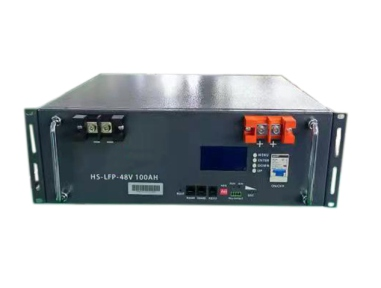
VRLA Baseline vs LiFePO4
| Item | Typical VRLA bank | LiFePO4 as supplied |
|---|---|---|
| Chemistry | VRLA lead-acid | LiFePO4 |
| Nominal voltage | 48V | 48V / 51.2V (16S) |
| Capacity | 100 Ah | 100 Ah (5.12 kWh per module) |
| Service life in hot climate | Shortens sharply above its rated temperature | LiFePO4 with BMS thermal management; charge derated as cells heat |
| Remote monitoring | Requires external probes | SNMP polling and traps — SOC, SOH, cell data, alarms |
| Sites deployed | — | 3 sites |
Results
- Three sites were commissioned in June 2025, each reporting into the operator's existing NMS over SNMP.
- Battery health is now checked from the operations centre rather than on site — SOC, SOH, cell voltages and alarms arrive as polled data and traps.
- The packs are managed for sustained high temperature: the BMS derates charge current as cells heat, reducing the high-temperature charge stress that shortens service life.
Related Product
- 48V LiFePO4 Telecom Battery — 50-200Ah, 6000+ cycles, RS485/CAN smart BMS
- All Battery & ESS Products
Case Study FAQ
What does SNMP give the operator that RS485 does not?
RS485 works well for local and point-to-point links. SNMP lets the battery be polled and send traps to the network management system over IP, so it sits alongside the rest of the site equipment in the operator's existing monitoring stack — no separate gateway to maintain.
How long will a 48V LiFePO4 telecom battery last in a hot climate?
Longer than VRLA in the same conditions, but the honest answer depends on how hot the cells actually run rather than on the ambient figure alone. VRLA life shortens sharply above its 25℃ rating, which is why hot sites replace strings early. LiFePO4 tolerates heat better, and the BMS extends that further by derating charge current as cell temperature rises — so the cells spend less time at their thermal limit. The pack reports cell temperature and state of health over SNMP, so degradation can be tracked instead of guessed at.
Can one NMS monitor batteries at several sites?
Yes. Each pack exposes its data over SNMP, so all sites report into the same network management system. That is what makes a three-site deployment practical here — no per-site monitoring hardware beyond the battery itself.
How much backup does a 48V 100Ah module provide?
A 48V 100Ah module stores about 5.12 kWh. Actual backup time depends on the site load: divide the usable energy by the site's DC load in watts. The BMS reports state of charge over SNMP, so runtime is based on measured data rather than an estimate.